Desire in the Middle Ages was multifaceted. Spectrum of Desire: Love, Sex, and Gender in the Middle Ages, published by The Metropolitan Museum of Art and accompanying the exhibition (on view at The Met Cloisters through March 29, 2026), offers a rigorous examination of how medieval artworks—ranging from sculpture and painting to manuscripts and jewelry—portrayed concepts of gender, sexuality, and love. Featuring more than forty works of art from the fourteenth to sixteenth centuries, the catalogue encourages readers to consider how sex, gender, and relationships shaped medieval lives and identities while also prompting reflection on how these historical frameworks continue to inform contemporary perspectives.
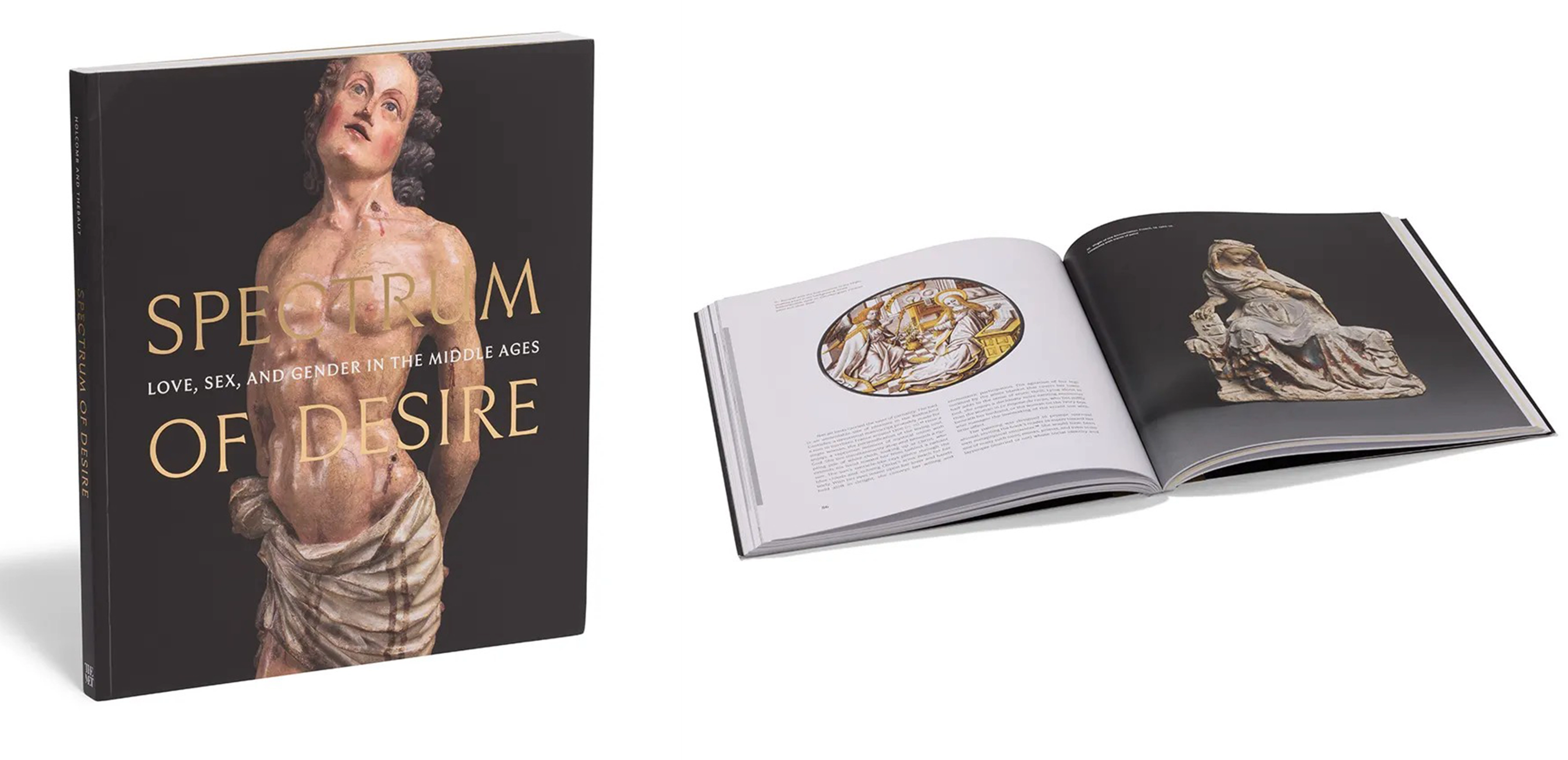
Spectrum of Desire: Love, Sex, and Gender in the Middle Ages is available at The Met Store and Met Publications.
In my conversation with exhibition curators and catalogue authors Melanie Holcomb and Nancy Thebaut we discuss the definition of queer theory and how it provides a lens through which to view the past more expansively, encompassing a range of sexual practices, gender variance, and the dynamics of power within human and divine relationships. Together, we explore the complexities of medieval experience and underscore the enduring relevance of these themes today.
Lina Palazzo:
Spectrum of Desire introduces readers to aspects of medieval art that are often overlooked or minimized. How does this publication offer new readings of individual objects?
Melanie Holcomb:
While gender and sexuality are well-trodden areas in medieval studies, Spectrum of Desire is unique in exploring these terms through the less common approach of material objects. One of the catalogue’s major contributions is its sustained attention to imagery. By foregrounding visual material, these objects themselves can speak, with the lens of gender and sexuality opening up new layers of meaning.
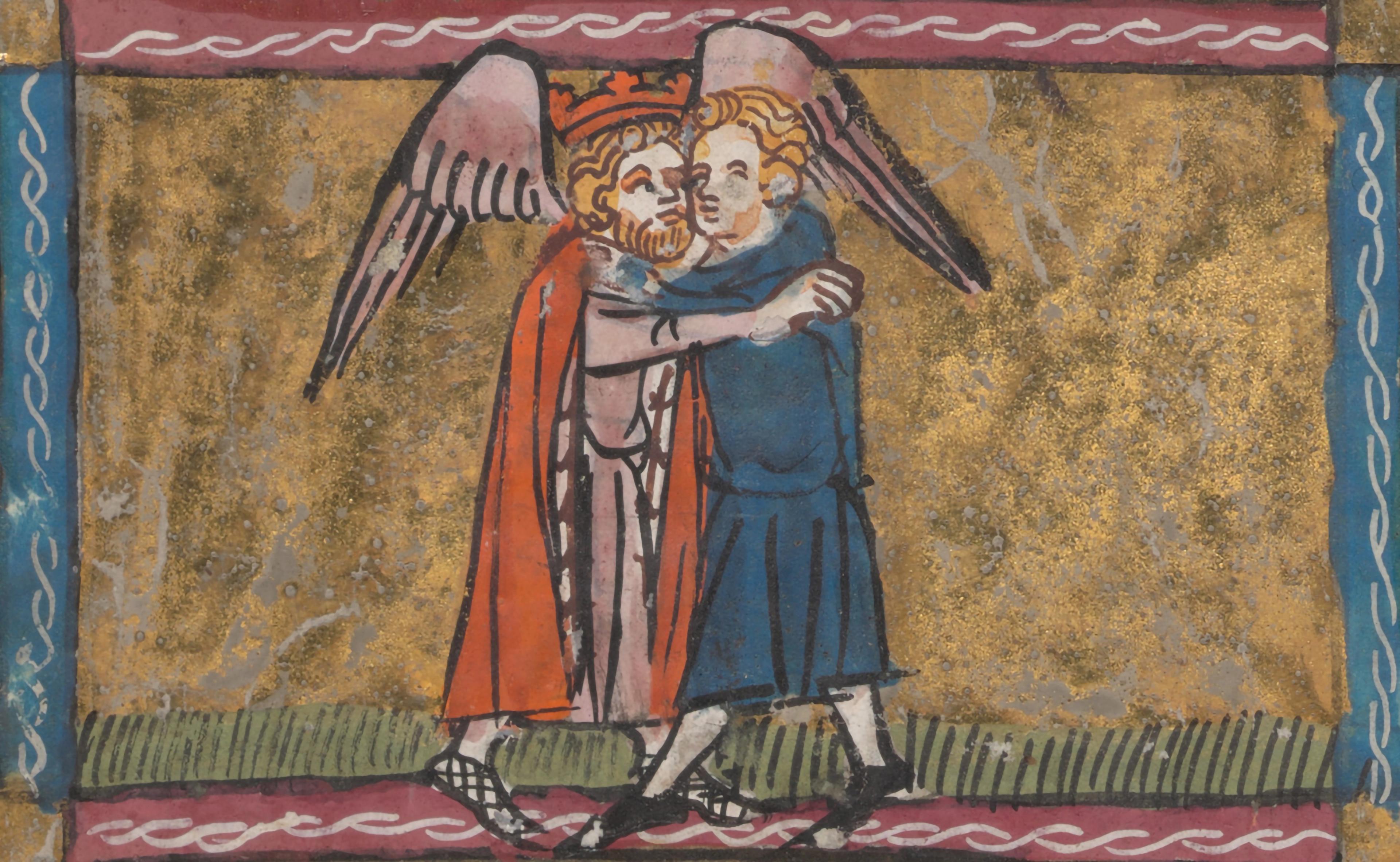
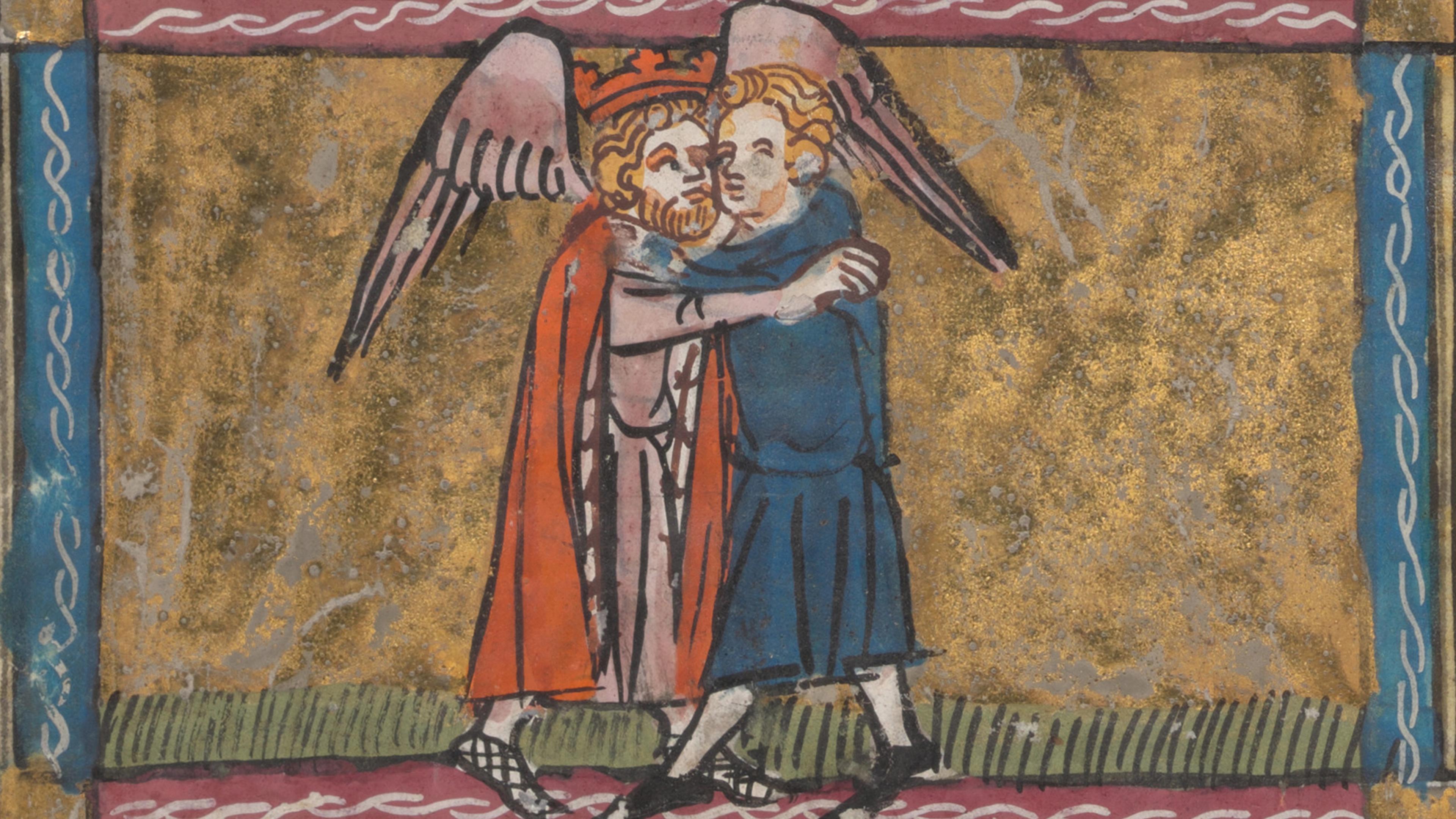
Amors embracing Amant from Jeanne de Montbaston’s (possible artist) the Roman de la Rose (Romance of the Rose) (detail), 1340. Opaque watercolor, gold leaf, iron gall ink on parchment. Courtesy of The Morgan Library & Museum, New York, Purchased by J. Pierpont Morgan, 1902 (MS M.185)
Nancy Thebaut:
Right, certain types of written sources, such as legal documents, indicate that the fourteenth through sixteenth century was a time when ideas about how to live and whom to love were hardening. Melanie and I were interested in the ways works of art can both reinforce the restrictive thinking of their moment and complicate these narratives: they can enrich our understanding of how people understood love, sex, and gender in this period. Objects made us think about the central role of art in shaping people's relationships with each other, their relationships with the divine, and the way they understood their own identities.
Holcomb:
The publication gives us the opportunity and space to conduct close readings of objects and explore their expanded meanings. Nancy and I begin this work in our essays, and five of our colleagues undertake it most extensively in the book’s section on Object Encounters, where they each choose a single artwork for an in-depth examination.
Palazzo:
Can you talk more in depth about these Object Encounters?
Holcomb:
Yes! One of the contributors, Karl Whittington, analyzed the sculpture of Saint Sebastian. After extensive conservation efforts by our conservator Lucretia Kargere, what emerged was this erotic beauty of Saint Sebastian in a way we had never been able to see before. Karl’s analysis encourages us to look at the sculpture with fresh eyes, especially in considering how the front and back serve different purposes.
The front shows the luminous beauty of the Saint while the back exposes the physical pains of his martyrdom. His skin stretches across pronounced bones, his shoulder blades bulge, and with a deep crease down the spine, the figure more resembles Christ’s tormented, broken body in many late-medieval crucifixes than the calm, heroic bodies popular in Italian Renaissance depictions of Sebastian. His hands are behind his back, emphasizing vulnerability, while his head leans far back, yielding to the torture and tilting upward toward God. Karl also points out how the paint on Saint Sebastian’s face appears reminiscent of contemporary drag makeup, with exaggerated orange-red cheeks, pink eyelids, and sweeping dark brows.
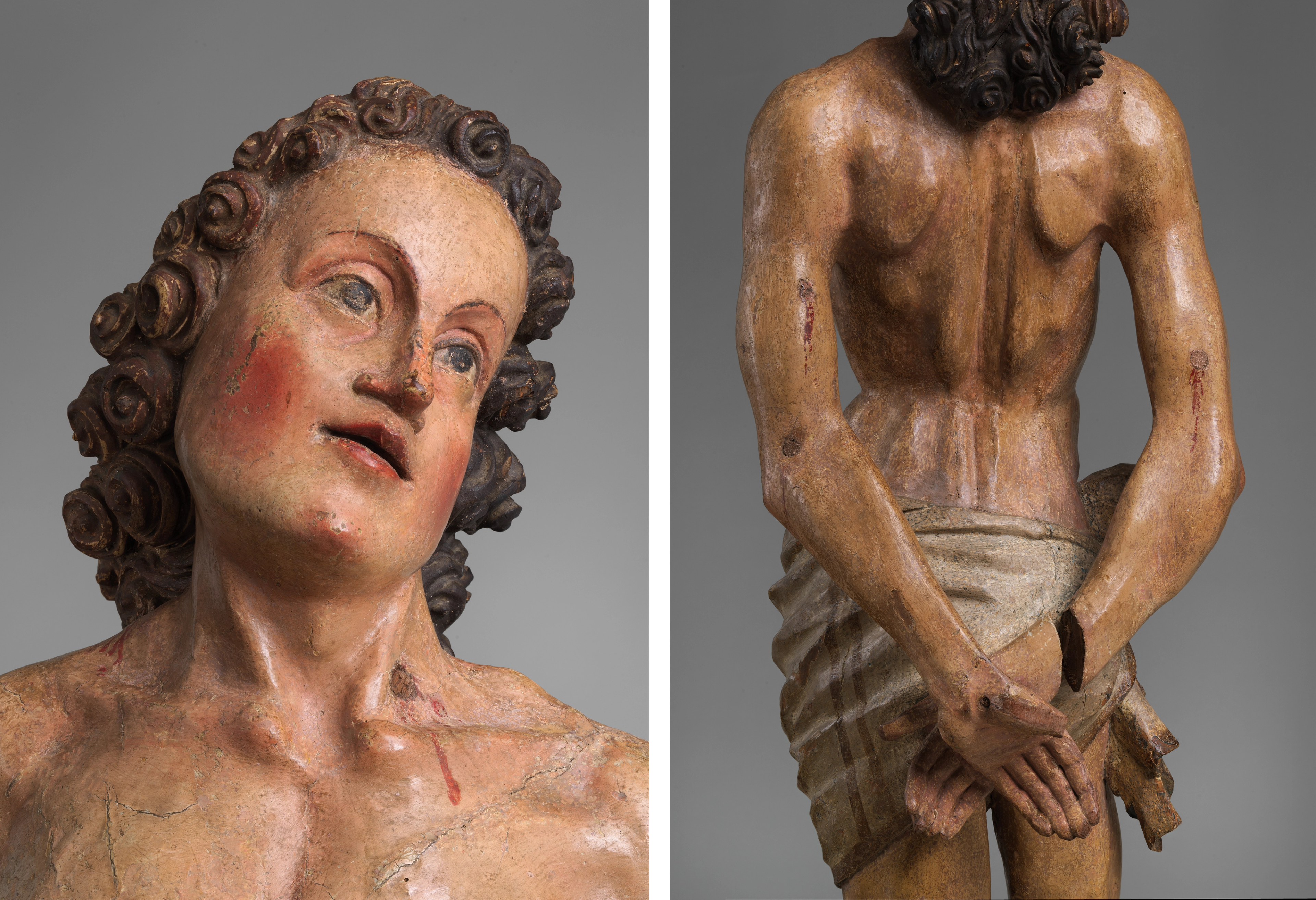
Saint Sebastian, late 15th century. Austria, Northern European. European poplar, with paint and gold, 49 1/4 x 12 3/8 x 9 7/8 in. (125.1 x 31.4 x 25.1 cm). The Metropolitan Museum of Art, New York, The Cloisters Collection, 1961 (61.15.2)
Thebaut:
Brian C. Keene’s text explores queer connections with Christ’s body in Michele Gimabono’s Man of Sorrows (ca. 1430). Keene discusses how devotion to the gash at Christ’s side—which is often likened to a womb, breast, or even vulva by medieval authors and artists—could prompt considerations of the role of such images for female-identifying viewers in relation to menstruation and childbirth.
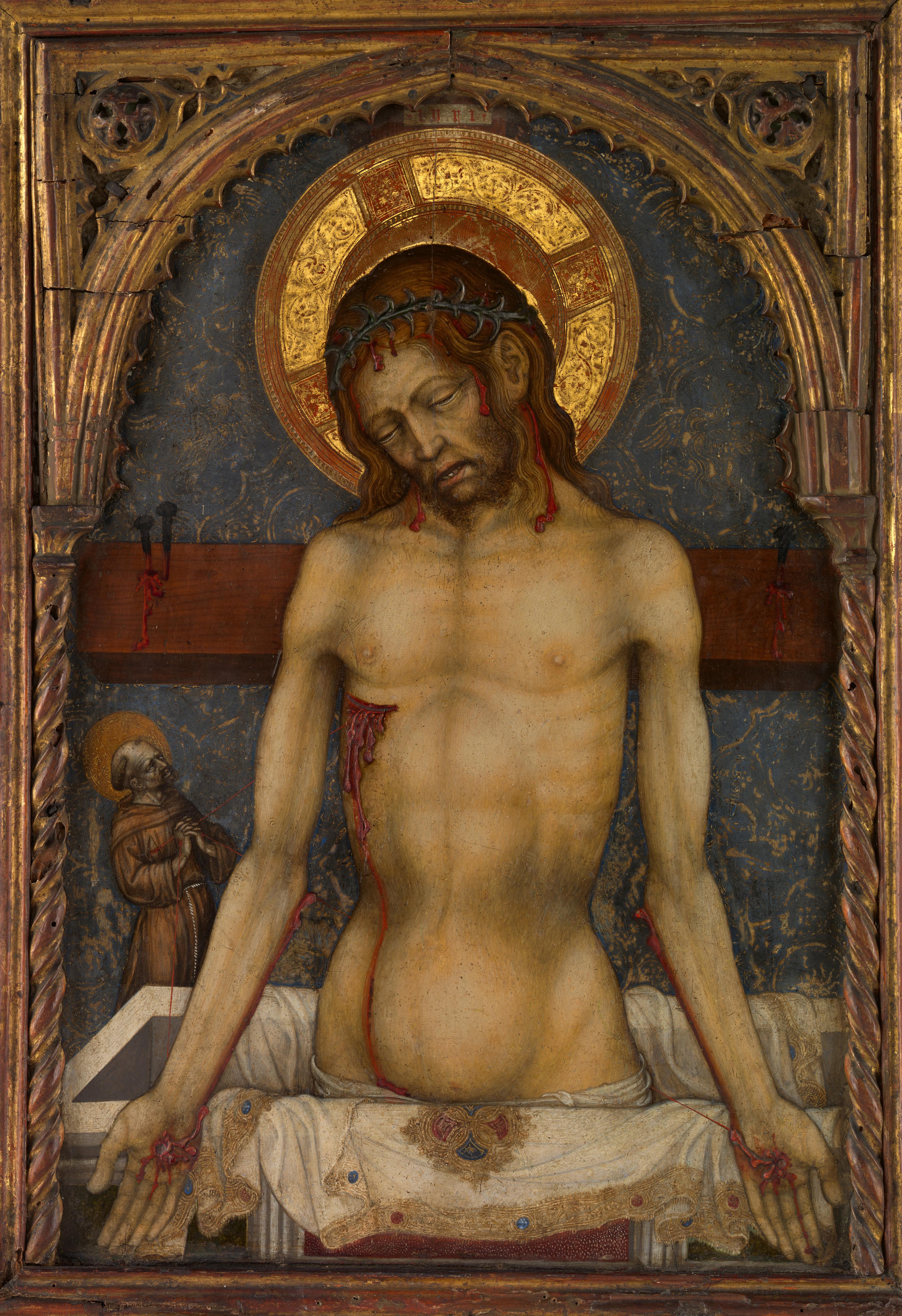
Michele Giambono (Michele Giovanni Bono) (Italian, active 1420–1462). Man of Sorrows, ca. 1430. Tempera and gold on wood, 21 3/4 x 15 3/4 in. (54.9 x 38.7 cm). The Metropolitan Museum of Art, New York, Rogers Fund, 1906 (06.180)
Keene then puts Man of Sorrows in dialogue with Catherine Opie’s Blood Grid #2 (2023). Opie’s piece frames details of blood from works of medieval and Renaissance art in the Vatican, detaching the images from their narrative contexts and isolating the wounds in celebrated pieces of art history. To Keene, both pieces tackle the historical and religious considerations behind artists’ depictions of nude bodies and physical states of suffering. Keene discusses how Opie exposes the ways cultural institutions, both religious and artistic, frame violence, suffering, and sanctity.
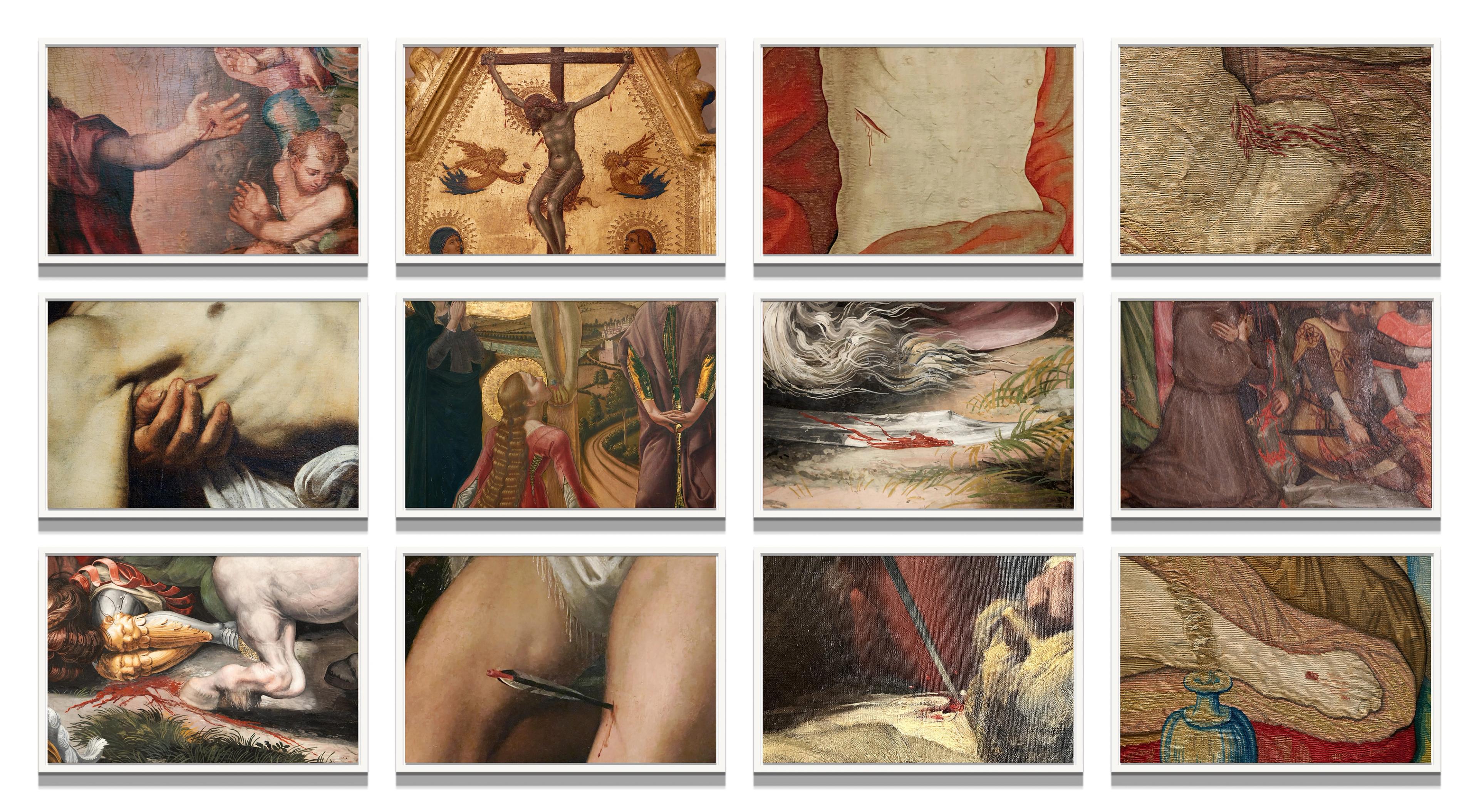
Catherine Opie (American, b. 1961). Blood Grid #2, 2023. Pigment print (edition of five), twelve prints, each 11 x 16 1/2 in. (27.9 x 41.9 cm). Lehman Maupin, New York, Los Angeles, Seoul, and London. © Catherine Opie, Courtesy Regen Projects, Los Angeles; Lehmann Maupin, New York, Hong Kong, London and Seoul; Thomas Dane Gallery, London and Naples; and Peder Lund, Oslo
There is no contemporary art in the exhibition, but Keene was able to place Man of Sorrows and Blood Grid #2 in conversation in the book. In doing so, he invites readers to make connections between the past and present, showing them how modern and contemporary artists are still inspired by these medieval objects.
Palazzo:
Thinking about these objects and how they relate to the present brings to mind Melanie’s essay “Medieval Erotica,” in which you examine how medieval images of sex and courtship are tied to concepts of time. How can readers understand these images of desire in a temporal framework?
Holcomb:
I wanted to explore how time itself functions as an element of erotics, and how certain objects undermine what some scholars describe as “straight time”—the linear progression of events that ultimately culminates in heterosexual union. Many works follow this sequence so predictably that it becomes this unquestioned narrative structure, which is a trajectory toward marriage between man and woman.
In the catalogue, I focused on a fourteenth-century box that presents the parable of the Prodigal Son. This ivory casket is remarkable for disrupting conventions of time. It tells the tale of a reckless child who leaves home, indulges in various excesses, and eventually returns home to a presumably conventional life. When examined more closely, however, scenes are revealed to linger far more on the son’s sexual activities than the biblical account does, emphasizing these encounters rather than his redemption.
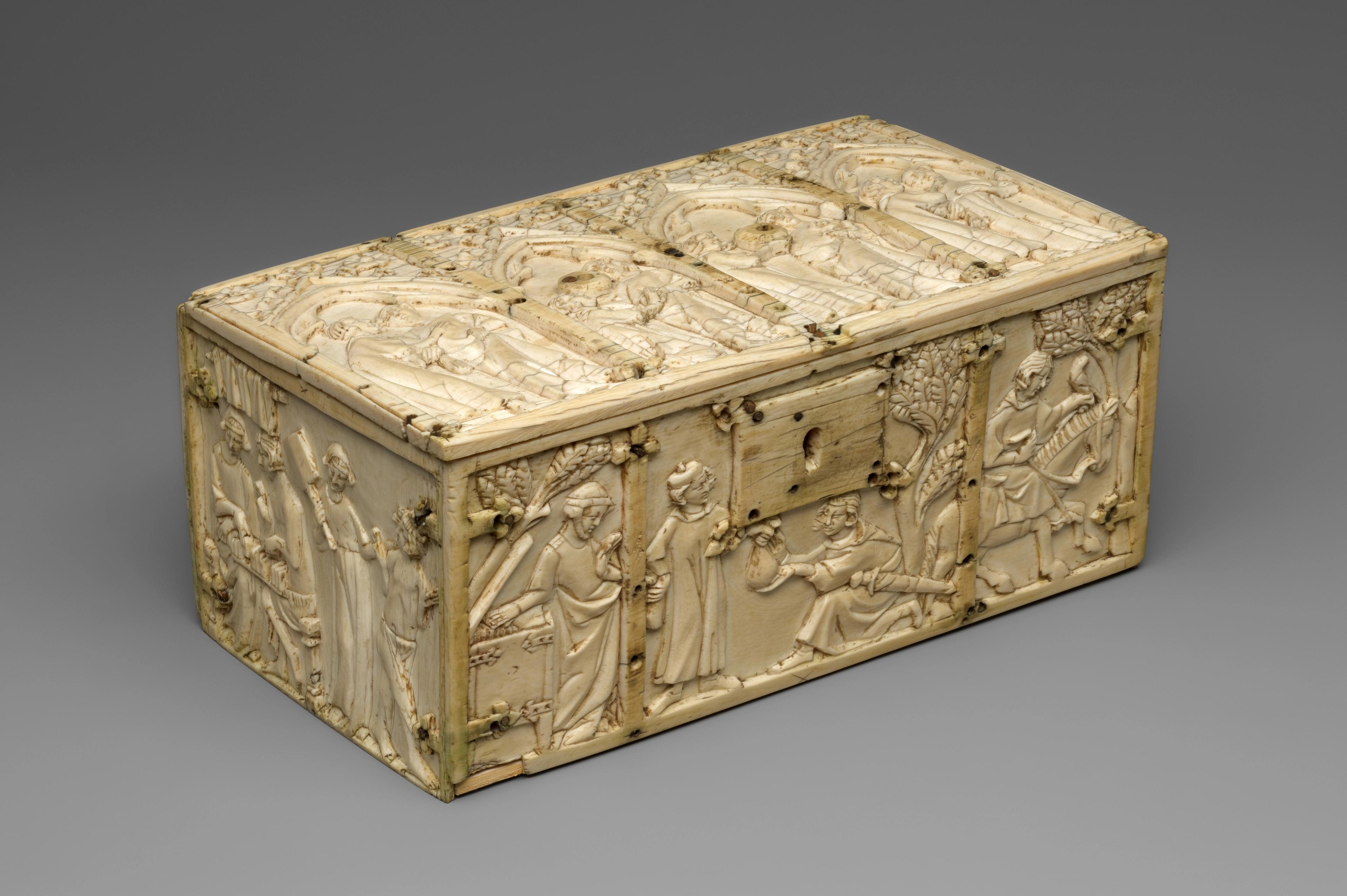
Box with the parable of the Prodigal Son and scenes of lovers, 14th century. French. Elephant ivory, 3 1/4 x 7 1/4 x 4 1/8 in. (8.1 x 18.3 x 10.5 cm). The Metropolitan Museum of Art, New York, Gift of George Blumenthal, 1941 (41.100.159a, b)
Viewers might expect the story to conclude with the son’s return and his father’s forgiveness, which is the lesson and climax of the story. Yet this scene is absent. Instead, the lid illustrates images of medieval lovers engaged in foreplay, offering no emotional closure or clear moral. In this way, the box suspends the resolution of the biblical story and rejects the assumption that stories must end in a conventional, restorative place. It exists in a perpetual present: a continuous space of desire and foreplay.
Thebaut:
Melanie, you have this great phrase in the essay about how the Prodigal Son box “luxuriates in libidinal time,” like many of our objects do.
Holcomb:
Thank you, Nancy. Yes, this idea of objects extending and sitting in libidinal time is a large component in how I was trying to read some of these works of art.
Palazzo:
In the book you also discuss the crucial relationship between religious objects and secular works of art. Some readers may be surprised to find them presented together. Could you speak more about the complex connection between religion, eroticism, and identity in the medieval world?
Thebaut:
What probably will surprise readers the most is how, for medieval people, sex and religion can coincide quite comfortably. In fact, it seems that eroticism was a key part of medieval devotion, enhancing devotional experiences. Texts and images of people imagining themselves with the divine as well as objects that would have facilitated an imaginary mystical union with the divine were highly sensual.
One way we explicitly put secular and sacred in conversation is in the essay “Marital and Mystical Unions,” which looks at the similarities between human-to-human and human-to-divine relationships. The way we explore this in the book differs from our approach in the exhibition, where these relationships are in two separate sections. Our hope is that, by the end, viewers will understand how they work in tandem. This connection is more clearly stated in the catalogue where we placed secular and sacred side by side on the page.
Eroticism was a key part of medieval devotion. It enhanced people's devotional experiences.
One such example is an image tucked into an initial in Le régime du corps (The Regimen of the Body), a popular late-medieval compendium of household medical knowledge. Here, a couple is depicted having sex. Next to them is an empty crib indicating how the primary purpose of their consummation is to have a child. The couple is not eroticized; they are fully clothed, thus serving more as a model of reproductive sex. The image accompanies text which discusses the health benefits of sex (it reduces fatigue and clears the mind), the drawbacks of not having enough of it (bad breath and weak kidneys), and when to have it (not when full from eating and not after sleeping).
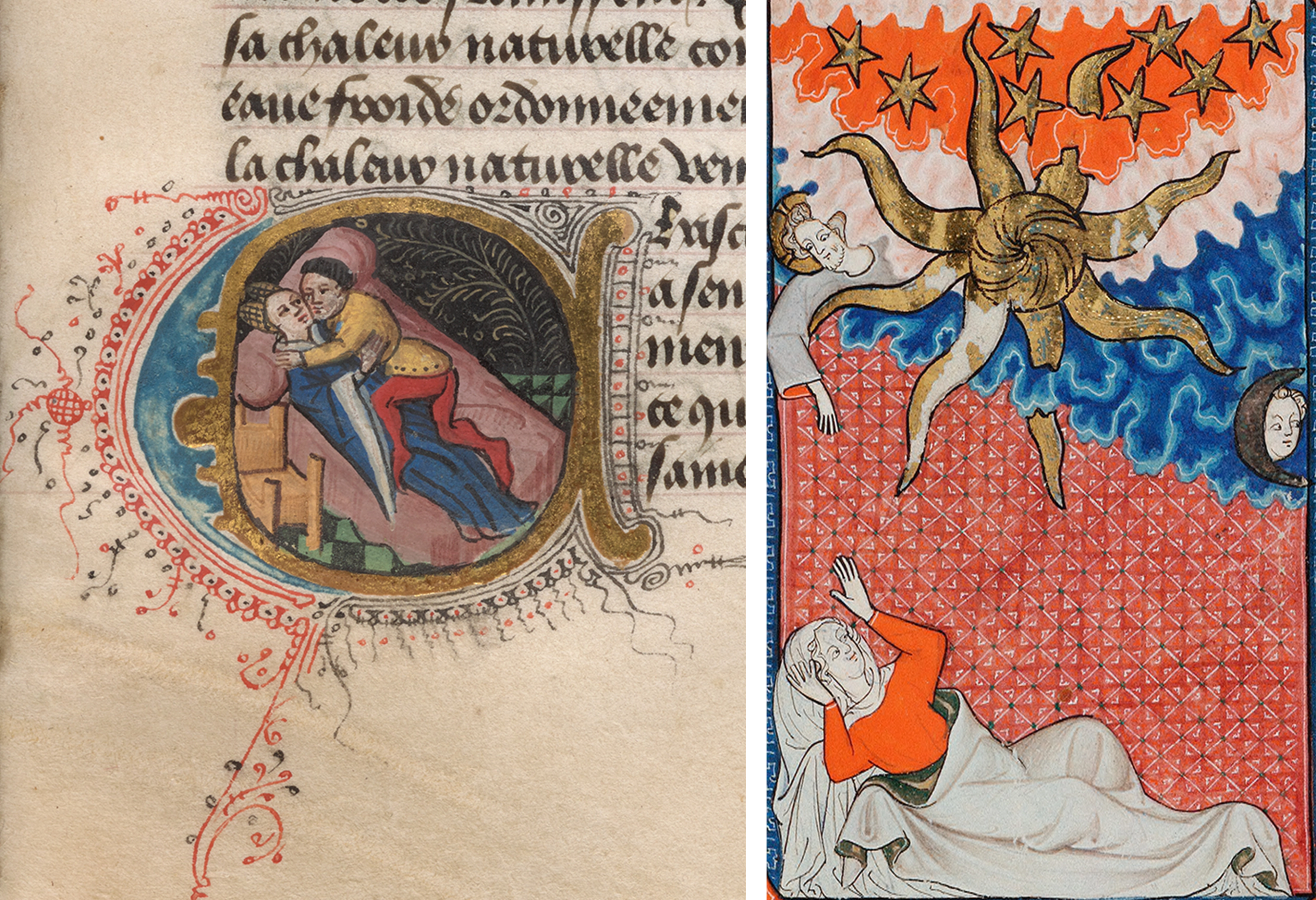
Left: Conjugal relations from Le régime du corps (The Regimen of the Body), ca. 1440–50. Possibly Rouen, France. Opaque watercolor, gold, silver and iron gall ink on parchment. The Morgan Library and Museum, New York, Purchased by J. Pierpont Morgan in 1902 (MS M.165). Right: The Sponsa in her spiritual bed from the Rothschild Canticles, ca. 1300. French or Flemish. Opaque watercolor, silver and gold leaf with iron gall ink on parchment. Courtesy of Beinecke Rare Book & Manuscript Library, Yale University
Further into the essay, we consider a very different kind of bedroom scene. The Rothschild Canticles, a devotional manuscript probably made for a nun in northern France around 1300, features a page showing a woman lying alone in bed beneath crumpled sheets. She lifts her hands towards God or Christ, who is peeking out from behind a sun with long, phallic, tentacular rays. They reach toward her. This woman is decidedly having a more sensual encounter than the couple in Le régime du corps. Putting these artworks in dialogue immediately shows how, for medieval people, eroticism could enhance their religious experience. For the nun, it served as an important devotional tool to help her imagine her own union with Christ, perhaps even imagining herself as the female figure in the bed.
Holcomb:
It’s also worth noting that in the catalogue, these works appear across a page turn from one another, and in the exhibition, we echoed this relationship by placing the works on opposite sides of the room so their visual dialogue would mirror the catalogue’s design.
Thebaut:
Yes! We also think about the relationship between religion, sex, and identity in the essay “Bodies in Flux,” especially in relation to church law. Sexual acts, nonconventional gender expressions, and religious heresies, for example, all fell under legal and theological notions of sodomia. While the English term sodomy is often used as a translation, it does not reflect the broad spectrum that sodomia captures in medieval sources. Within the catalogue and exhibition, we show works of art that obliquely represent forms of desire viewed as transgressive by medieval authors and artists.
One example of this can be found on a boxwood carving of Eve and a female-headed serpent. Here, the artist frames certain kinds of desire—namely, the desire to eat the apple as well as the highly sensual encounter between Eve and her serpentine counterpart—as morally problematic. The representation of this moment, which many theologians understood as the very cause of bad forms of desire (including lust, concupiscence, and even desire for someone of the same gender), is highly eroticized: Eve holds two apples to her chest, thus inviting us to think about them as breasts, and her upper lip curls over the apple in her mouth. You also notice how Eve and the serpent closely resemble each other: their faces and hair are quite similar, and the position of Eve’s body, which wraps around one side of the base, evokes the serpent’s own form. It’s only when looking at the piece from multiple sides that you can distinguish their differences (the serpent has scales, for instance, and Eve has legs). The artist is thus representing the Fall, the moment of original sin, in relation to female desire in very unflattering terms and may even be associating it with same-gender desire.
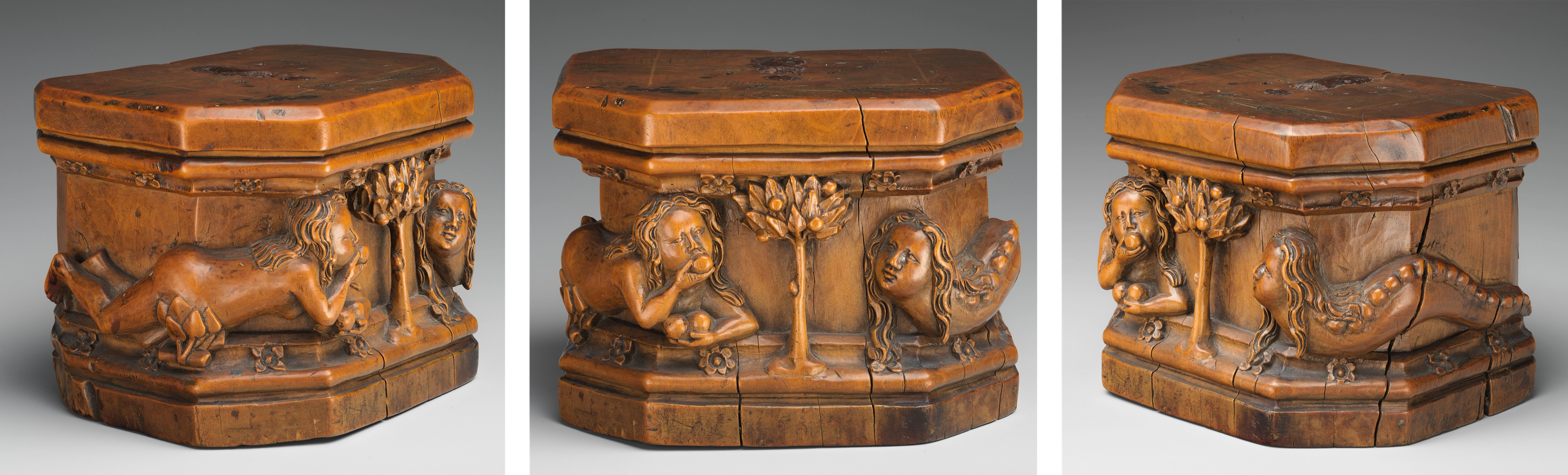
Base for a statuette with Eve and a female-headed serpent, 1470–80. Netherlandish. Boxwood, 3 1/2 × 4 7/8 × 3 3/8 in. (8.9 × 12.4 × 8.6 cm). The Metropolitan Museum of Art, New York, The Cloisters Collection, 1955 (55.116.2)
At the same time, medieval attitudes toward gender expression were far from uniform. Although secular and ecclesiastical laws in the later Middle Ages prohibited people from presenting as a gender different from the one assigned to them at birth, more than thirty saints are known to have changed their gender presentation over the course of their lives, revealing a striking contrast in tradition. Many of these narratives describe saints who were assigned female at birth and later lived as male monks. In these cases, adopting a different gender presentation was not only permitted within the narrative framework but was portrayed as an expression of sanctity itself. This stands in notable tension with medieval legal structures, which condemned gender expressions seen as non-normative in everyday life.
Holcomb:
Right. Gender nonconformity in the lives of the saints is an expression of their sanctity. Many saints retained nonnormative identities despite circumstances that might make their life easier to not do so. It is completely tied up with their holiness.
Similarly, readers might find the medieval concept of virginity interesting. To paraphrase Saint Augustine, you are not born a virgin, but you are made a virgin. We are accustomed to religious figures, such as priests or nuns, taking a vow of celibacy, but, in the Middle Ages, men and women regularly pledged chastity as part of their identity. Being celibate was a particularly important role for women as it was not only an expression of their bodily autonomy but it was deeply linked to their religious identity as well as the sanctity of their body.
Palazzo:
Circling back to the idea of queer theory, Nancy, the book uses this academic approach and explains how the term “queer” goes beyond modern ideas of sexuality—it includes a wide range of gender identities, sexual practices, and ways of resisting fixed categories. How does “queering” the study of medieval art help readers understand these objects within the specific time and place in which they were made?
Thebaut:
A queer approach, in many ways, makes us better and more sensitive historians. The theory itself puts us in a particular frame of mind where we set aside presumptions we might have about the past. The modern perception of heterosexuality, for example, can plague individuals when they look at historical objects and subjects. A queer approach sets aside notions of cisgender normativity: it forces us to take objects, the people who made them, and those who saw them, on their own terms. In this way, it opens us up to medieval identities and categories that are, more often than not, quite different from our own. “Queering” makes us treat these subjects and objects with a lot of care, to ensure that we're not imposing our modern ideas or presumptions on medieval identities and beliefs.
We have been really inspired by how a queer approach allows us to embrace an “open mesh of possibilities,” to use Eve Kosofsky Sedgwick’s powerful phrase; how it expands the meaning of an object rather than shutting it down. In “Medieval Erotica,” we look at this leather box where there are multiple male-female couples, but on the front around this heart lock, there are two men. In the past, people may have quickly assumed that this depicts rivals fighting for the heart of a female lover, or even that the image was a mistake. I use this example because it resonates with how queering invites us to ask what is going on. We should not make quick assumptions about who these men are, what their relationship might be, and how people might have previously understood their relationship. Throughout the book and exhibition, we aim to slow down, open up new possibilities, and treat these objects with care.
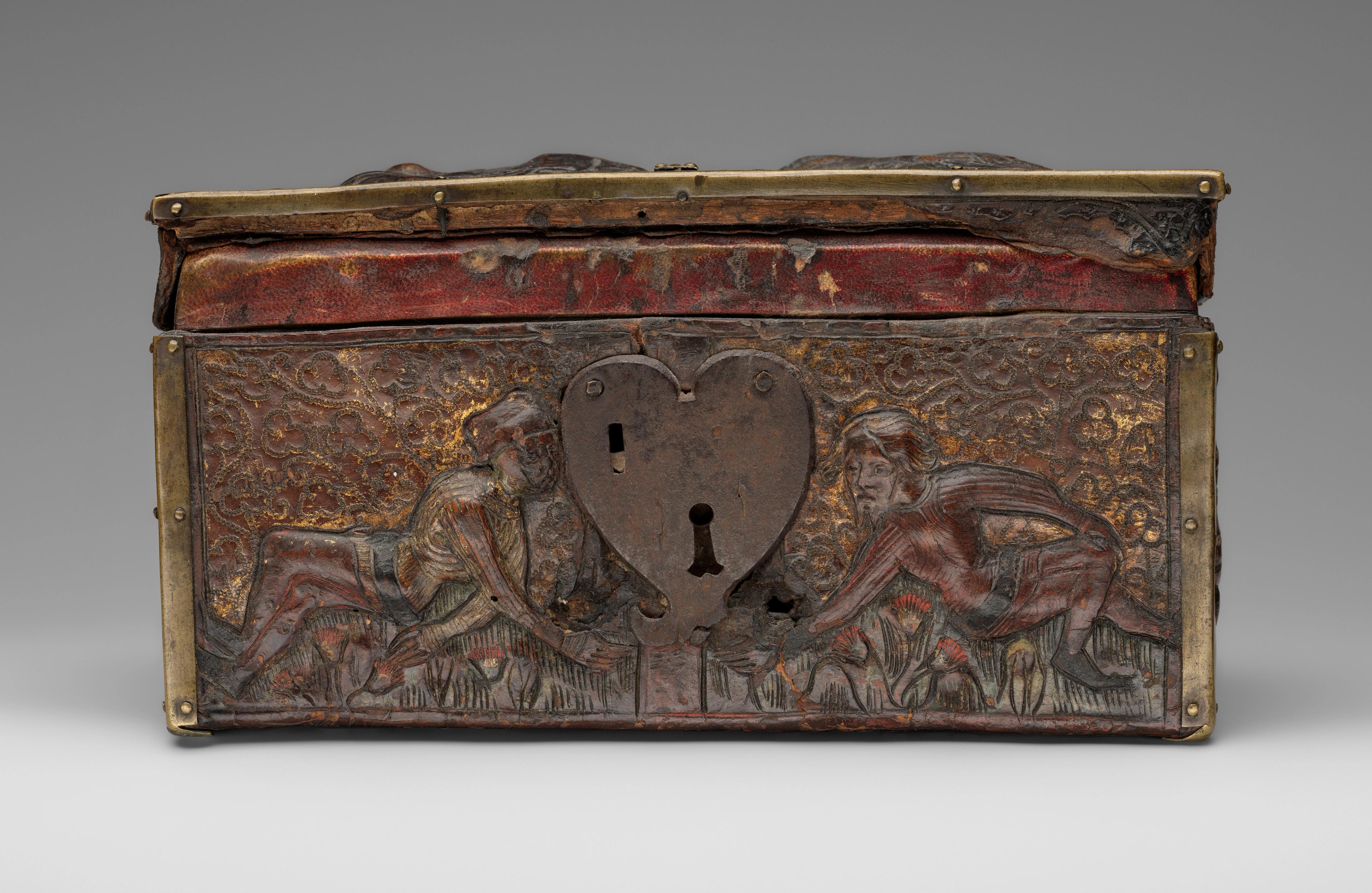
Front of box with scenes of lovers (coffret), 14th century. Flemish. Embossed leather, walnut, gold, paint, copper alloy and iron fittings, 4 3/8 x 8 3/8 x 7 in. (11 x 21.1 x 17.8 cm). The Metropolitan Museum of Art, New York, Gift of George Blumenthal, 1941 (41.100.194)
Palazzo:
We’ve seen how art played a crucial role in shaping the language of desire, both real and imagined, between humans and the divine, but how does Spectrum of Desire invite readers to reflect on the ways that sex, gender, and relationships structure their own identities and lives?
Holcomb:
We do not want to be overly directive. We want to invite readers to gain comfort in categories that may differ from our modern ones. Our work lies in building an environment where readers feel as though they can openly live. One can queer their own moment, as it were.
Thebaut:
I love that, Melanie. Yes, these objects invite readers to be more expansive in the ways they might think about identity, relationships, and love. What do their friendships and family look like, for instance.
Holcomb:
Even how they define kinship. To query what desire may mean and look like to them.
Thebaut:
Through our work in Spectrum of Desire, we are implicitly creating what the medieval historian Carolyn Dinshaw has described as “communities across time.” There are many ways individuals may identify with objects and subjects in the book, but however they resonate with love or desire is ultimately up to them.
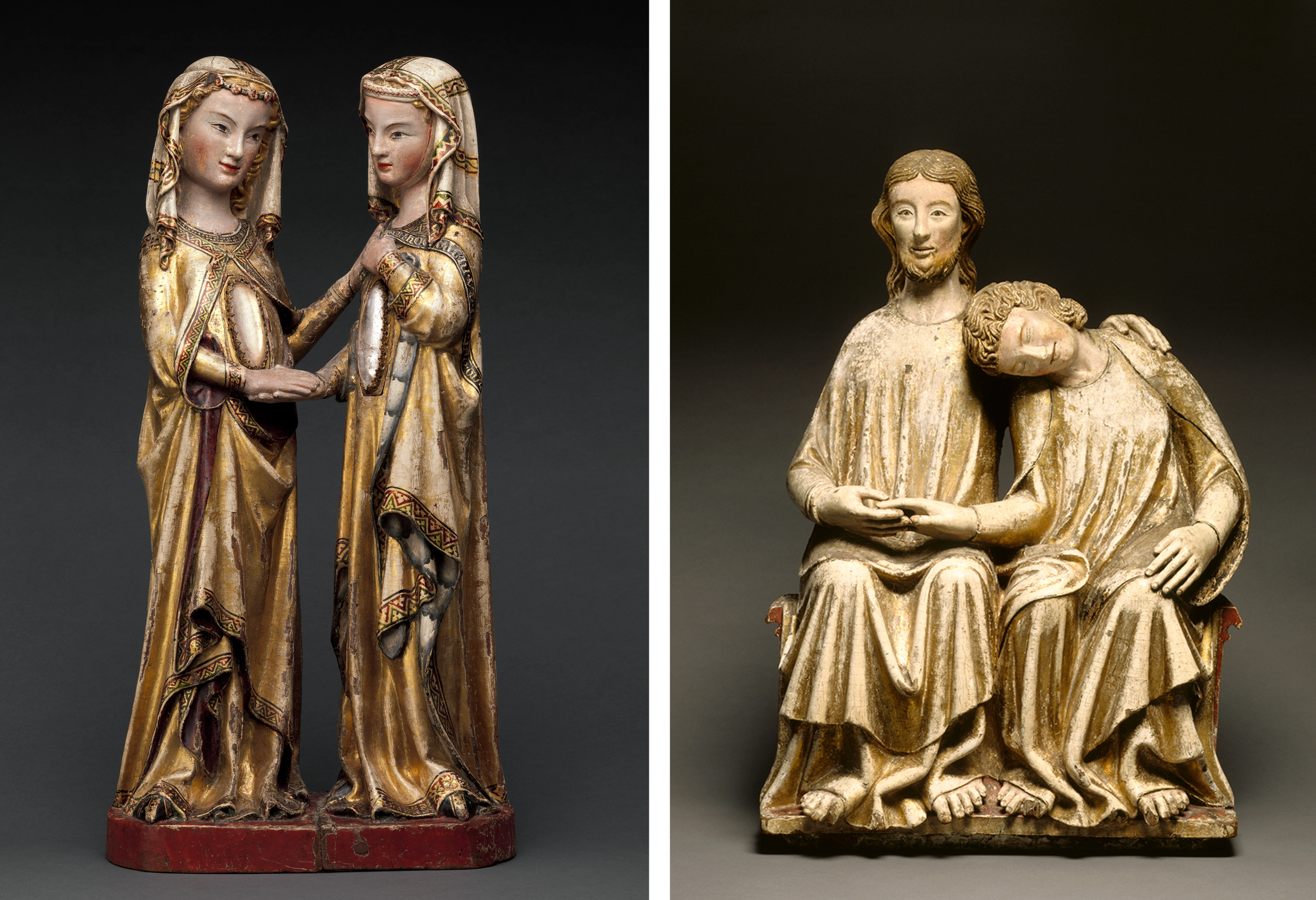
Left: Attributed to Master Heinrich of Constance (German, ca. 1300). The Visitation, ca 1310–20. Walnut with paint, gold, and rock-crystal cabochons inset in gilded silver mounts, 23 1/4 × 11 7/8 × 7 1/4 in. (59.1 × 30.2 × 18.4 cm). The Metropolitan Museum of Art, New York, Gift of J. Pierpont Morgan, 1917 (17.190.724). Right: Christ and Saint John the Evangelist, the beloved disciple, 1300–20. German. Oak with paint and gold, 36 1/2 x 25 3/8 x 11 3/8 in. (92.7 x 64.5 x 28.8 cm). The Cleveland Museum of Art, Purchase from the J. H. Wade Fund (1928.753). Photo © Cleveland Museum of Art/Bridgeman Images
Holcomb:
Discussing examples from the past can arguably create a safer space to think about the nature of desire. Looking at things historically can open up conversations in our own moment. We aimed to create comfortable spaces and communities for discussion, to let those from the Middle Ages inspire readers to contemplate the nature of love and desire, however that may manifest.


