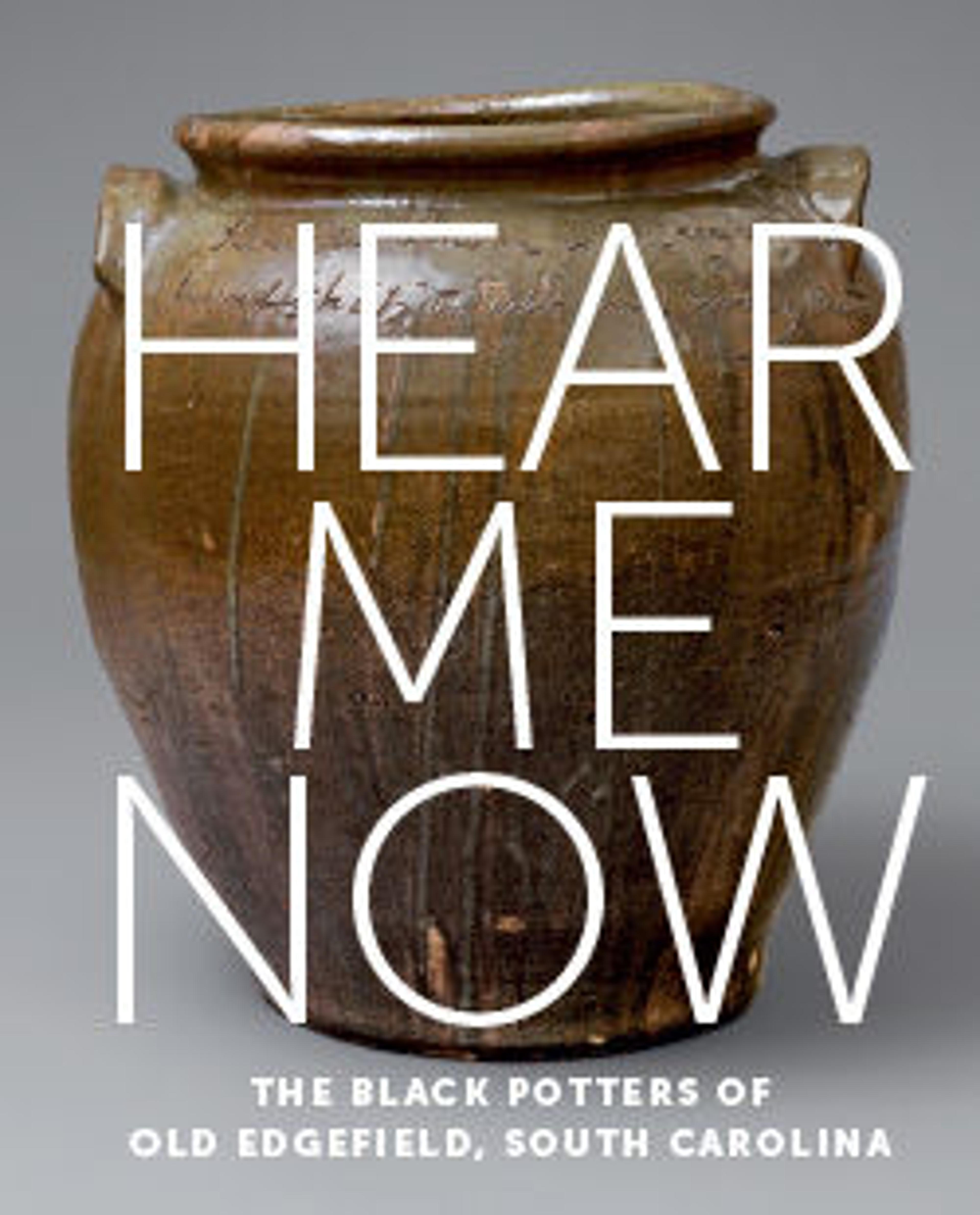
Face jug
Artwork Details
- Title: Face jug
- Maker: Unrecorded Edgefield District potter (American)
- Manufacturer: Miles Mill Pottery (American, 1867-85)
- Date: ca. 1867–85
- Geography: Made in Edgefield District, South Carolina, United States
- Culture: American
- Medium: Alkaline-glazed stoneware with kaolin
- Dimensions: Height: 7 x 5 x 5 1/2 in. (17.8 x 12.7 x 14 cm)
- Credit Line: Rogers Fund, 1922
- Object Number: 22.26.4
- Curatorial Department: The American Wing
Audio
4009. Face jug, unrecorded Edgefield district potter (ca. 1867-85)
NAJEE OMAR: What happens when you come in contact with this piece? What does it awaken inside of you? There’s 150 plus years of folks who, whether it's just their eyes or their physical hands, have been impacted by this one vessel.
NARRATOR: That's Najee Omar, a Brooklyn-born poet, performer and organizer, whom The Met invited to respond to this jug. It's one of many known as 'face jugs,' made by enslaved potters in the Edgefield District of South Carolina both before and just after the Civil War.
NAJEE OMAR: I felt like this particular piece was requiring me to do stillness, was requiring me to listen, and requiring me to also be a vessel.
NARRATOR: This is Omar reading his poem, “Ritual."
NAJEE OMAR: Ritual. We light a candle and place it on the altar. We pour fresh water for the creator and more for our mother and father's lines. We humble ourselves before a jar of flowers, preferably in full bloom. We speak their names. We say Mamie DeVeaux. We say thank you. We say Yvette Baum-Ritter. We say I love you. We say Carrie Mae Ritter. We say I miss you. We know they are here.
Ritual. We begin with gratitude. Fold hands and bow heads before our food, and to those who prepared our plates, we give thanks. To the animals and plants sacrificed for each meal, for this moment, nourishing our bodies and spirits, for this moment we are blessed to share together, we give thanks. For our breath. Thanks for our tribe. Thanks for grace, especially when we are in need. We tell them when we are in need. We listen for guidance and believe. We believe.
Ritual. We gather round a burning cake. We sing Stevie's version in unison, clap our hands ‘cause we don't need no music. We shout louder and louder to number our days. We make a wish, then blow. Thank God another year has our name on it.
Ritual. We roll papers and stuff them with trees. We light up, then tame the flame between our lips. We inhale, set intentions and nod in agreement. We cough. We laugh. We believe. With each pull, we learn to still time, fill our lungs with all the goodness this life has to offer. We tilt our heads back, lift our chins up. We close our eyes till freedom is the dark, till freedom is our mouths slowly filling with wings. We exhale. We fly.
Ritual. We put pen to page beneath the new moon. We give thanks to things we want. We give names to things we want. Abundance. We say love. We say money. We say health. And to everything we've let go to who we no longer choose to be, we set fire and never look back. We write this poem from a past life way before we are even given language to speak. We write this poem from the future, from some small room in South Carolina or some small room in downtown Brooklyn. We speak this poem, standing in the gaps. What I'm really trying to say is we are many-faced vessels made in the image of our potters. Handle and rim. Glazed stoneware and spells. We are them, and they are us. We, too gritty to be reduced to tabletop decoration. We, too alive to be encased in glass at some museum. We, too alive. We, too alive. So instead, we stare eye to eye with everything we are, with everything we've ever been. We, too alive. So today we say amen, and forever we say asé. Ritual.
NARRATOR: To read this poem, please visit The Met’s website.
More Artwork
Press the down key to skip to the last item.
Related Content
Publications
Books, guides, and catalogues published by The Met.
Research Resources
The Met provides unparalleled resources for research and welcomes an international community of students and scholars. The Met's Open Access API is where creators and researchers can connect to the The Met collection. Open Access data and public domain images are available for unrestricted commercial and noncommercial use without permission or fee.
To request images under copyright and other restrictions, please use this Image Request form.
Feedback
We continue to research and examine historical and cultural context for objects in The Met collection. If you have comments or questions about this object record, please contact us using the form below. The Museum looks forward to receiving your comments.