Search the collection

Filter By

Object Type / Material
Geographic Location
Department
Date
Show Only:
  • As part of the Met's Open Access policy, you can freely copy, modify and distribute this image, even for commercial purposes.
    APIPublic domain data for this object can also be accessed using the Met's Open Access API
  • Objects with changed or unknown ownership in continental Europe between 1933-1945. Learn more
More than 10,000 results for probably Italian, Brixen (now Bressanone)
Sort by:
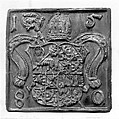
Tile, Green-glazed earthenware, probably Italian, Brixen (now Bressanone)
probably Italian, Brixen (now Bressanone)
1580
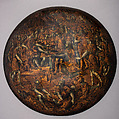
Shield, Girolamo da Treviso  Italian, Wood, linen, gesso, gold leaf, polychromy, Italian, probably Bologna
Girolamo da Treviso
ca. 1535
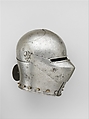
Armet, LIONARDO  Italian, Steel, copper alloy, Italian, probably Milan
LIONARDO
ca. 1440
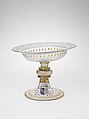
Armorial tazza, Italian (Venice) or façon de Venise (Venetian-style), Colorless (slightly gray) nonlead glass; blown, pattern-molded, enameled, gilt, Venetian or façon de Venise, or French
Italian
French
1499–1514
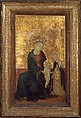
Madonna and Child with Saint Catherine of Siena and a Carthusian Donor, Italian, Lombard (probably Pavia)  Italian, Lombard (probably Pavia), Tempera and gold on wood, Italian, Lombardy, probably Pavia
Italian, Lombard (probably Pavia)
ca. 1411–24
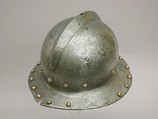
War Hat, Steel, copper alloy, probably Italian
probably Italian
1450–1500
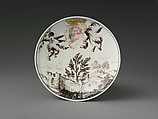
Saucer, Opaque glass, Italian, probably
Italian, probably
18th century
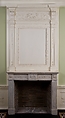
Mantel, Marble, Italian, probably
Italian, probably
1800–1830
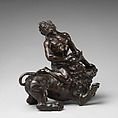
Samson and the Lion, Bronze, with red-brown natural patina, remains of dark brown lacquer, probably Italian
probably Italian
17th century
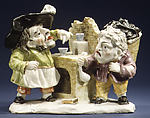
Alchemist and his Assistant, Hard-paste porcelain, probably Italian
probably Italian
ca. 1770–75
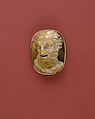
Cameo with the Head of a Satyr, Sardonyx with gold mount, probably Italian
probably Italian
late 18th or early 19th century
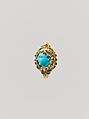
Alexander the Great (?), Turquoise, enamel, gold, probably Italian
probably Italian
ring: mid-16th century; cameo: early Hellenistic 4th century BCE
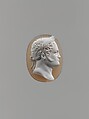
Laureate Head of Alexander I of Russia, Onyx, probably Italian
probably Italian
ca. 1810–20
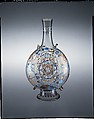
Pilgrim flask, Italian , Venetian, early 16th century, Colorless (slightly tan) nonlead glass.  Blown, enameled, gilt., Italian (Venice)
Italian
ca. 1500–1525
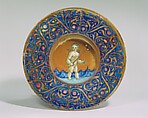
Dish (tondino), Italian , Gubbio, early 16th century, Maiolica (tin-glazed earthenware), Italian, Gubbio
Italian
ca. 1530
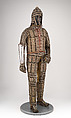
Armor of Mail and Plate, Steel, iron, copper alloy, textile, Indian, Sindh (now Pakistan)
Indian, Sindh (now Pakistan)
late 18th–first half of the 19th century
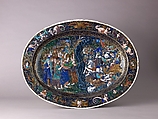
Dish: The Destruction of the Hosts of Pharaoh, Master IC (probably Jean Court) or French, Limoges, Painted enamel on copper, partly gilt.
Master IC (probably Jean Court)
Jean Cour (or Court)
probably early 17th century
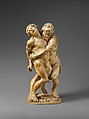
Dizi, Jade, probably Chinese
probably Chinese
late 18th–early 19th century
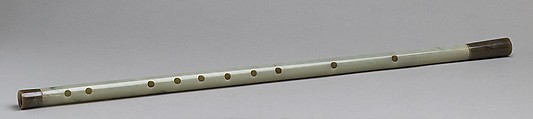
Hercules and Achelous, Master of the Martyrdom of St. Sebastian  Austrian, Ivory, probably Austrian
Master of the Martyrdom of St. Sebastian
probably mid-17th century
Tondo mirror frame, Italian, Siena, Poplar; carved, gilt; deep red-brown bole., Italian, Siena
Italian, Siena
ca. 1490–1500
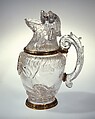
Ewer in the Shape of a Sitting Dog, Italian , Milan, second half of the 16th century and, Rock crystal, cut on the wheel, enameled gold, rubies, and reverse-painted and gilded glass (verre églomisé)., Italian, Milan and German (Aachen) or French (Paris)
Multiple artists/makers
second half 16th century and second half 19th century
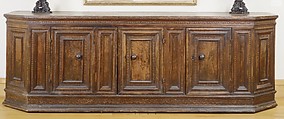
Cupboard (credenza), Italian (Tuscan) , first half 16th century Italian, Walnut, poplar, ebony, ebonized wood, maple, Italian, Tuscany
Italian (Tuscan)
ca. 1500–1550
Cassone (one of a pair), Italian (Florentine?) Painter , second quarter 15th century Italian, Tempera on lindenwood, molded and gilt ornament, Italian, probably Florence
Italian (Florentine?) Painter
second quarter 15th century
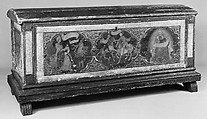
Cassone (one of a pair), Italian (Florentine?) Painter , second quarter 15th century Italian, Tempera on lindenwood, molded and gilt ornament, Italian, probably Florence
Italian (Florentine?) Painter
second quarter 15th century
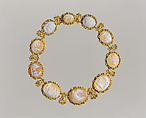
Glass mosaic bowl, Glass, Roman, probably Italian
Roman, probably Italian
late 1st century BCE–early 1st century CE
Glass striped mosaic bowl, Glass, Roman, probably Italian
Roman, probably Italian
late 1st century BCE–early 1st century CE
Ribbed mosaic glass bowl with base ring, Glass, Roman, probably Italian
Roman, probably Italian
late 1st century BCE–early 1st century CE
Ribbed mosaic glass bowl, Glass, Roman, probably Italian
Roman, probably Italian
late 1st century BCE–early 1st century CE
Glass mosaic bowl, Glass, Roman, probably Italian
Roman, probably Italian
late 1st century BCE–early 1st century CE
Parrying Dagger with Scabbard , Steel, iron, leather, Italian, probably Naples
Italian, probably Naples
ca. 1650–75
Reinforcing Breastplate, Steel, silver, Italian, probably Milan
Italian, probably Milan
ca. 1625–30
Pair of Stirrups from a Horse Armor Made for a Member of the Collalto Family, Iron alloy, Italian, probably Milan
Italian, probably Milan
ca. 1560
Horse Armor Probably Made for Count  Antonio IV Collalto (1548–1620), Steel, leather, copper alloy, textile, Italian, probably Brescia
Italian, probably Brescia
ca. 1580–90 and later
Horse Armor Made for a Member of the Collalto Family, Steel, gold, leather, Italian, probably Milan
Italian, probably Milan
ca. 1560 and later
Cantle Plate (Rear Saddle Plate) From a Horse Armor Probably Made for Count  Antonio IV Collalto (1548–1620), Steel, Italian, probably Brescia
Italian, probably Brescia
ca. 1580–90
Barbute with Hinged Nasal, Steel, Italian, probably Milan
Italian, probably Milan
ca. 1450
Breastplate from an Armor of Francesco Maria II della Rovere (1548–1631), Duke of Urbino, Steel, gold, Italian, probably Milan
Italian, probably Milan
ca. 1570
Apothecary jar (albarello), Maiolica (tin-glazed earthenware), Italian, probably Faenza
Italian, probably Faenza
ca. 1480
Apothecary jar (albarello), Maiolica (tin-glazed earthenware), Italian, probably Faenza
Italian, probably Faenza
ca. 1480
Dish (piatto), Maiolica (tin-glazed earthenware), Italian, probably Faenza
Italian, probably Faenza
ca. 1530