Search the collection

Filter By

Object Type / Material
Geographic Location
Department
Date
Show Only:
  • As part of the Met's Open Access policy, you can freely copy, modify and distribute this image, even for commercial purposes.
    APIPublic domain data for this object can also be accessed using the Met's Open Access API
  • Objects with changed or unknown ownership in continental Europe between 1933-1945. Learn more
More than 10,000 results for Ottoman, probably Eastern Europe
Sort by:
Boss for a Crupper Strap, Copper alloy, Ottoman, probably Eastern Europe
Ottoman, probably Eastern Europe
18th century
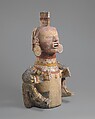
Xantil (deity censer), Eastern Nahua artist(s), Ceramic, slip, Eastern Nahua
Eastern Nahua artist(s)
1200–1521 CE
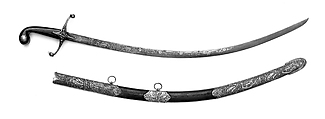
Saber with Scabbard, Acem Oglu  Turkish, Steel, silver-gilt, gold, agate, wood, leather, Turkish, Ottoman
Acem Oglu
19th century
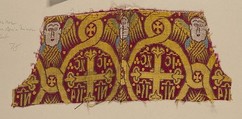
Silk textile with Seraphim and Crosses, Silk, lampas weave (ground in satin, pattern in twill), Ottoman
Ottoman
17th century
Fragment of woven silk with Seraphim and Crosses, Silk, Ottoman
Ottoman
17th century
Archer's Ring, Jade, gold, Ottoman
Ottoman
probably late 16th–early 17th century
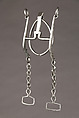
Ring Bit, Iron alloy, silver, copper, Ottoman
Ottoman
18th–19th century
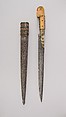
Dagger (Jambiya) with Sheath, Steel, jade, gold, velvet, gemstone, Ottoman
Ottoman
18th century
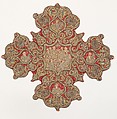
Embroidered cross from an Omophorion, Silk and metal thread embroidery on a foundation of silk satin backed with linen plain weave, Ottoman
Ottoman
late 17th or early 18th century
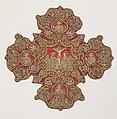
Embroidered cross from an Omophorion, Silk and metal thread embroidery on a foundation of silk satin backed with linen plain weave, Ottoman
Ottoman
late 17th or early 18th century
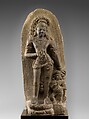
The Bodhisattva Vajrapani, Sandstone, Eastern India, Bihar, probably Nalanda
Eastern India, Bihar, probably Nalanda
7th–early 8th century
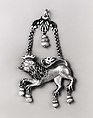
Lion Pendant, Gold, enamel and pearls., Western Europe
Western Europe
probably second half 19th century

Curlik, Wood, Eastern Europe (Bosnian)
Eastern Europe (Bosnian)
1936–37
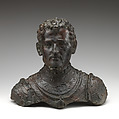
Ottavio Farnese, Duke of Parma and Piacenza, Pastorino di Giovan Michele de' Pastorini, Bronze on green marble base, Europe
Pastorino di Giovan Michele de' Pastorini
19th or early 20th century
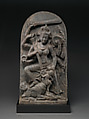
Goddess Durga Slaying the Demon Mahisha, Schist, Eastern India, Bihar, probably Gaya district
Eastern India, Bihar, probably Gaya district
second half of the 9th century
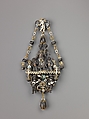
Pendant of "Ambergris", Black composition, gold, enamel, and diamonds., probably Western Europe, possibly Paris
probably Western Europe, possibly Paris
late 19th century
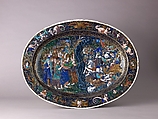
Dish: The Destruction of the Hosts of Pharaoh, Master IC (probably Jean Court) or French, Limoges, Painted enamel on copper, partly gilt.
Master IC (probably Jean Court)
Jean Cour (or Court)
probably early 17th century
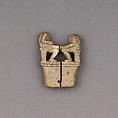
Dagger Pommel, Ivory, probably Northern Europe
probably Northern Europe
possibly 9th–11th century
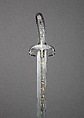
Saber with Scabbard and Strap, Steel, gold, wood, leather, Eastern European, probably Hungary
Eastern European, probably Hungary
ca. 1550
Ottoman
17th century
Ottoman
17th–18th century
Ottoman
17th–18th century
Ottoman
18th century
Ottoman
18th–19th century
Ottoman
early 19th century
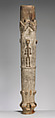
Fokwe mi drum, Eastern Lagoons artist, Wood, kaolin, Lagoon peoples
Eastern Lagoons artist
19th–mid-20th century
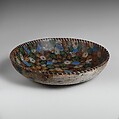
Glass hemispherical mosaic bowl, Glass, Greek, probably Eastern Mediterranean
Greek, probably Eastern Mediterranean
2nd–mid-1st century BCE
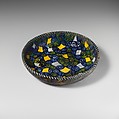
Glass mosaic dish, Glass, Greek, probably Eastern Mediterranean
Greek, probably Eastern Mediterranean
2nd–mid-1st century BCE
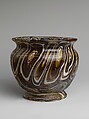
Glass mosaic jar, Glass, Greek, probably Eastern Mediterranean
Greek, probably Eastern Mediterranean
2nd–early 1st century BCE
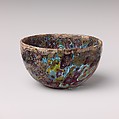
Glass mosaic bowl, Glass, Greek, probably Eastern Mediterranean
Greek, probably Eastern Mediterranean
2nd–mid-1st century BCE
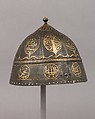
Helmet, Steel, gold, Egyptian, Ottoman
Egyptian, Ottoman
ca. 1734
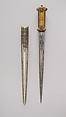
Dagger with Sheath, Steel, silver, ivory, coral, wood, Turkish, Ottoman
Turkish, Ottoman
19th century
Dagger with Sheath, Steel, ivory, silver, wood, possibly coral, Turkish, Ottoman
Turkish, Ottoman
18th–19th century
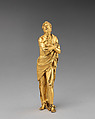
Prisoner, Bronze, later fire gilding, Possibly northern Europe
Possibly northern Europe
late 16th–early 17th century
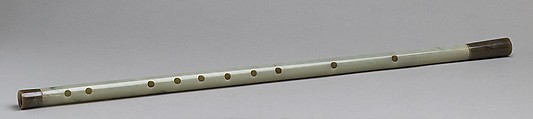
Dizi, Jade, probably Chinese
probably Chinese
late 18th–early 19th century
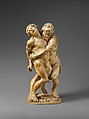
Hercules and Achelous, Master of the Martyrdom of St. Sebastian  Austrian, Ivory, probably Austrian
Master of the Martyrdom of St. Sebastian
probably mid-17th century
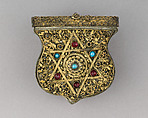
Patch Box, Silver, gold, turquoise, garnet?, Ottoman, Ottoman provinces, possibly Balkan
Ottoman, Ottoman provinces, possibly Balkan
19th century
Quilt, Silk, Southern Europe
Southern Europe
17th century
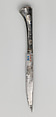
Knife, Silver, steel, probably Eastern European
probably Eastern European
19th century
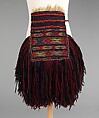
Apron, wool, metal, probably Eastern European
probably Eastern European
first quarter 20th century