Search the collection

Filter By

Object Type / Material
Geographic Location
Department
Date
Show Only:
  • As part of the Met's Open Access policy, you can freely copy, modify and distribute this image, even for commercial purposes.
    APIPublic domain data for this object can also be accessed using the Met's Open Access API
  • Objects with changed or unknown ownership in continental Europe between 1933-1945. Learn more
More than 10,000 results for Italian (possibly)
Sort by:
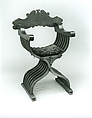
Folding armchair (sedia a Savonarola), Walnut, carved and incised; red silk cut velvet; linen., Italian (possibly)
Italian (possibly)
15th century (textile); 19th century (chair, with earlier parts)
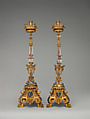
Ornament, Silver gilt and leather, Italian, possibly Padua
Italian, possibly Padua
third quarter 15th century
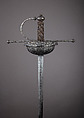
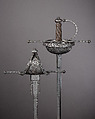
Cup-Hilted Rapier, Steel, iron, Italian, possibly Naples
Italian, possibly Naples
ca. 1650–75
Parrying Dagger, Steel, iron, Italian, possibly Naples
Italian, possibly Naples
ca. 1650–75
Cup-Hilted Rapier and Matching Parrying Dagger, Steel, iron, Italian, possibly Naples
Italian, possibly Naples
ca. 1650–75
Shaffron (Horse's Head Defense), Ambrogio de Osma  Italian, Steel, Italian, possibly Brescia
Ambrogio de Osma
ca. 1460–70
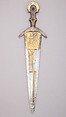
Cinquedea, Steel, gold, copper alloy, horn, brass, Italian, possibly Emilia
Italian, possibly Emilia
ca. 1500
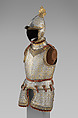
Armor of Giovanni Battista Bourbon del Monte (1541–1614), Steel, gold, textile, leather, Italian, possibly Brescia
Italian, possibly Brescia
ca. 1590
Shield, Wood, leather, gesso, bole, paint, gold, Italian, possibly Bologna
Italian, possibly Bologna
ca. 1600
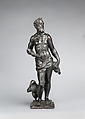
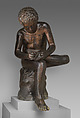
Spinario, Antonello Gagini  Italian, Bronze, Italian, possibly Messina
Antonello Gagini
early 16th century
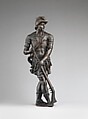
Warrior (Musketeer), Bronze, Italian, possibly Venice
Italian, possibly Venice
17th century
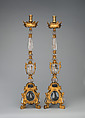
Pair of altar candlesticks, Bronze, fire-gilt, rock crystal, Italian, possibly Naples
Italian, possibly Naples
ca. 1620–40
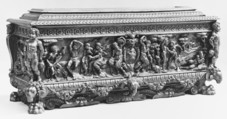
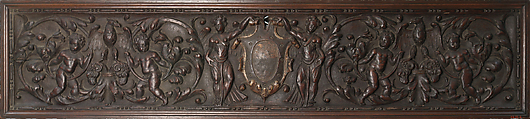
Cassone, Walnut, Italian, possibly Venice
Italian, possibly Venice
second half 16th century
Altar candlestick (one of a pair), Bronze, fire-gilt; rock crystal, Italian, possibly Rome
Italian, possibly Rome
1610–20
Jupiter with a thunderbolt, Joseph de Levis  Italian, Bronze, Italian, possibly Verona
Joseph de Levis
late 16th–early 17th century
Altar candlestick (one of a pair), Bronze, fire-gilt; rock crystal, Italian, possibly Rome
Italian, possibly Rome
1610–20
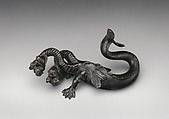
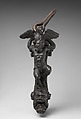
Pair of double-headed monsters, Bronze, with black lacquer patina, Italian, possibly Venice
Italian, possibly Venice
late 17th century
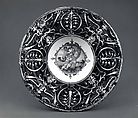
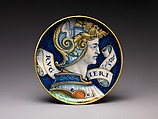
Maiolica: Plate (tondino), Maiolica (tin-glazed earthenware), Italian, possibly Cafaggiolo
Italian, possibly Cafaggiolo
ca. 1520
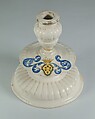
Candlestick (candeliere), Maiolica (tin-glazed earthenware), Italian, possibly Montelupo
Italian, possibly Montelupo
mid-17th century
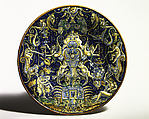
Plate (piatto), Maiolica (tin-glazed earthenware), Italian, possibly Cafaggiolo
Italian, possibly Cafaggiolo
1508
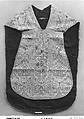
Chasuble, Silk and metal thread, Italian, possibly
Italian, possibly
19th century
Italian, possibly Sardinia
mid-17th century
Italian, possibly Turin
ca. 1760
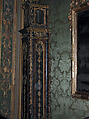
Clock case, Wood, painted and gilded, Italian, possibly Naples or Sicily
Italian, possibly Naples or Sicily
17th century
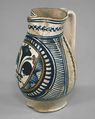
Armorial jug (boccale), Maiolica (tin-glazed earthenware), Italian, possibly Florence or Faenza
Italian, possibly Florence or Faenza
late 15th century
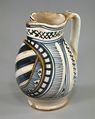
Armorial jug (boccale), Maiolica (tin-glazed earthenware), Italian, possibly Florence or Faenza
Italian, possibly Florence or Faenza
ca. 1470–90
Strip, Silk on linen, Italian, possibly Sicily
Italian, possibly Sicily
17th century
Border, Drawnwork, linen and silk, Italian, possibly Sicily
Italian, possibly Sicily
17th century
Border, Drawnwork, Italian, possibly Sicily
Italian, possibly Sicily
17th century
Strip, Embroidered net, punto à rammendo, Italian, possibly Sardinia
Italian, possibly Sardinia
late 16th century
Fragment, Bobbin lace, Italian, possibly Milan
Italian, possibly Milan
18th century
Cover, Linen and cotton, Italian, possibly Perugia
Italian, possibly Perugia
15th century
One strip of yellow and green lampas silk; possibly originally part of a chasuble, Linen and silk, Italian, possibly Lucca
Italian, possibly Lucca
ca. 1450
One strip of yellow and green lampas silk; possibly originally part of a chasuble, Linen and silk, Italian, possibly Lucca
Italian, possibly Lucca
ca. 1450
Orphrey woven with figurative repeat design of seraphim with Virgin and Child and reversed IHS Christogram in glories, Silk and linen, Italian, possibly Lucca
Italian, possibly Lucca
ca. 1450
Orphrey woven with figurative design of Saint Peter and the Virgin and Child, Silk and linen, Italian, possibly Florence
Italian, possibly Florence
15th–16th century
Orphrey woven with figurative repeat design of Seraphim and the Virgin and Child, Silk and linen, Italian, possibly Florence
Italian, possibly Florence
15th–16th century
Orphrey woven with figurative design of Seraphim with IHS Christogram in glory, and God the Father holding the Dead Christ, Silk, linen and metal thread, Italian, possibly Florence
Italian, possibly Florence
15th–16th century
Apparel for a vestment woven with figurative repeat design of Seraphim and IHS Christogram in glories, Silk, linen and metal thread, Italian, possibly Florence
Italian, possibly Florence
15th–16th century
Apparel for a vestment woven with figurative design of the Resurrected Christ, Silk and linen, Italian, possibly Florence
Italian, possibly Florence
15th–16th century