Lidded Trunk
Artwork Details
- Title: Lidded Trunk
- Artist: Ada Vilcan Thomas (Native American, Chitimacha, 1924–1992)
- Date: 1987
- Geography: Object place Louisiana, United States
- Medium: Dyed rivercane
- Dimensions: H. 15 x W. 13 in. (38.1 x 33 cm)
- Credit Line: Ralph T. Coe Collection, Gift of Ralph T. Coe Foundation for the Arts, 2011
- Object Number: 2011.154.105a, b
- Curatorial Department: The American Wing
Audio
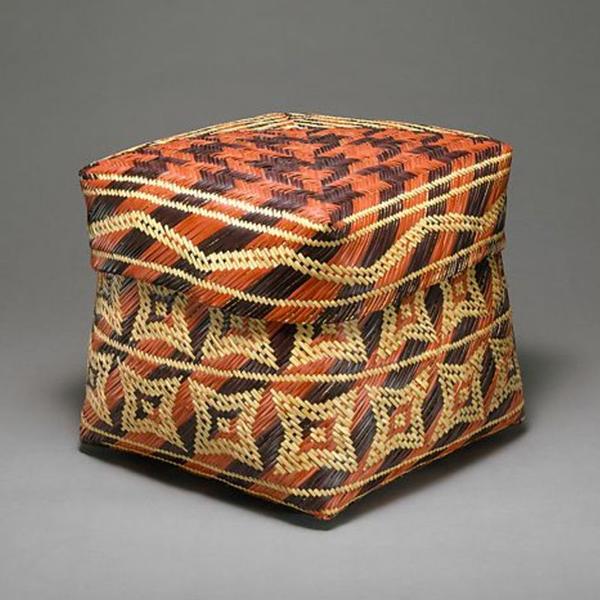
9803.1: Two Chitimacha Baskets With Lids, Ada Vilcon Thomas | Not on view
TANTOO CARDINAL: Take your time to examine the complex woven patterns on these two Chitimacha baskets. They show stylized representations of various animal tracks.
Patricia Marroquin Norby is Associate Curator of Native American Art at The Met:
PATRICIA MARROQUIN NORBY: The large trunk includes across the top the worm track patterns and other small animal prints or tracks.
The smaller basket also includes the worm track pattern across the top. And then the meandering design along the walls of the basket is called the “alligator entrail” design.
TANTOO: In both their design and creation, these baskets reflect deep connections between the Chitimacha people and their riverine environment.
[SFX: TRICKLING RIVER WATER AND SOUNDS OF HARVESTING RIVER CANE?]
PATRICIA: Chitimacha people are from the Southeastern Louisiana region and seasonally they go out in groups and harvest the rivercane from along natural swamps, or cane forests.
TANTOO: Rivercane is a type of bamboo native to the Southeastern United States
PATRICIA: The rivercane is harvested, then stripped and cleaned, soaked and dyed, and then it’s used in large strips to weave these incredibly complex baskets.
TANTOO: These baskets are often used simply as storage containers. But the basketmaking knowledge that’s been passed down through generations of Chitimacha women is a cherished cultural asset. Community history maintains that it was a Chitimacha ancestor who first taught basketmaking to the local community, where it has been practiced for thousands of years. Today, just a handful of basket-makers carry on the practice.
PATRICIA: These particular designs, the particular methods that are used for creating these baskets, the knowledge that is passed down from one generation to the next, directly ties the community to their homelands. So they’re not only artistic expression, they’re also an expression of community sovereignty.
Listen to more about this artwork
More Artwork
Press the down key to skip to the last item.
Related Content
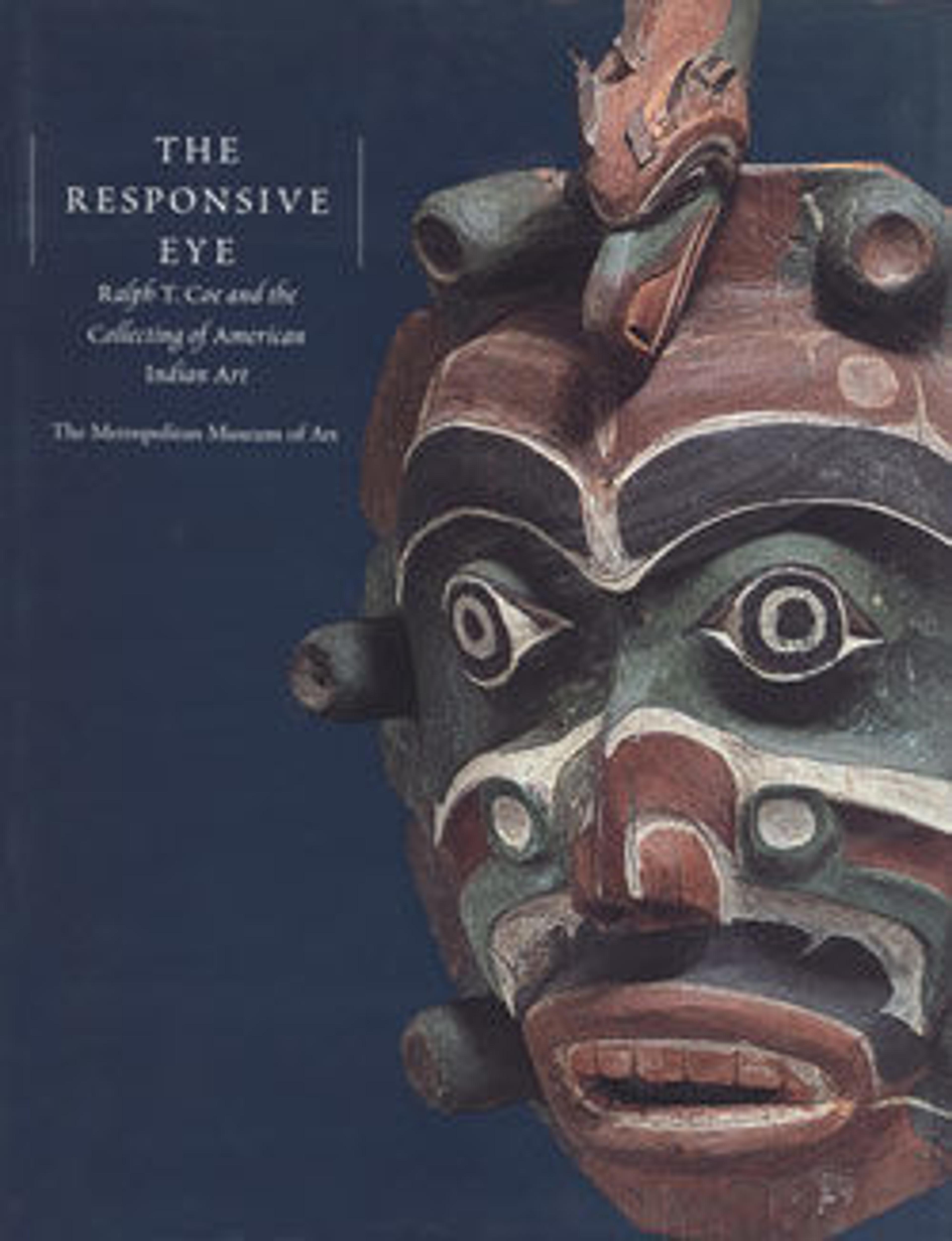
Publications
Books, guides, and catalogues published by The Met.
Research Resources
The Met provides unparalleled resources for research and welcomes an international community of students and scholars. The Met's Open Access API is where creators and researchers can connect to the The Met collection. Open Access data and public domain images are available for unrestricted commercial and noncommercial use without permission or fee.
To request images under copyright and other restrictions, please use this Image Request form.
Feedback
We continue to research and examine historical and cultural context for objects in The Met collection. If you have comments or questions about this object record, please contact us using the form below. The Museum looks forward to receiving your comments.