Terracotta Panathenaic prize amphora
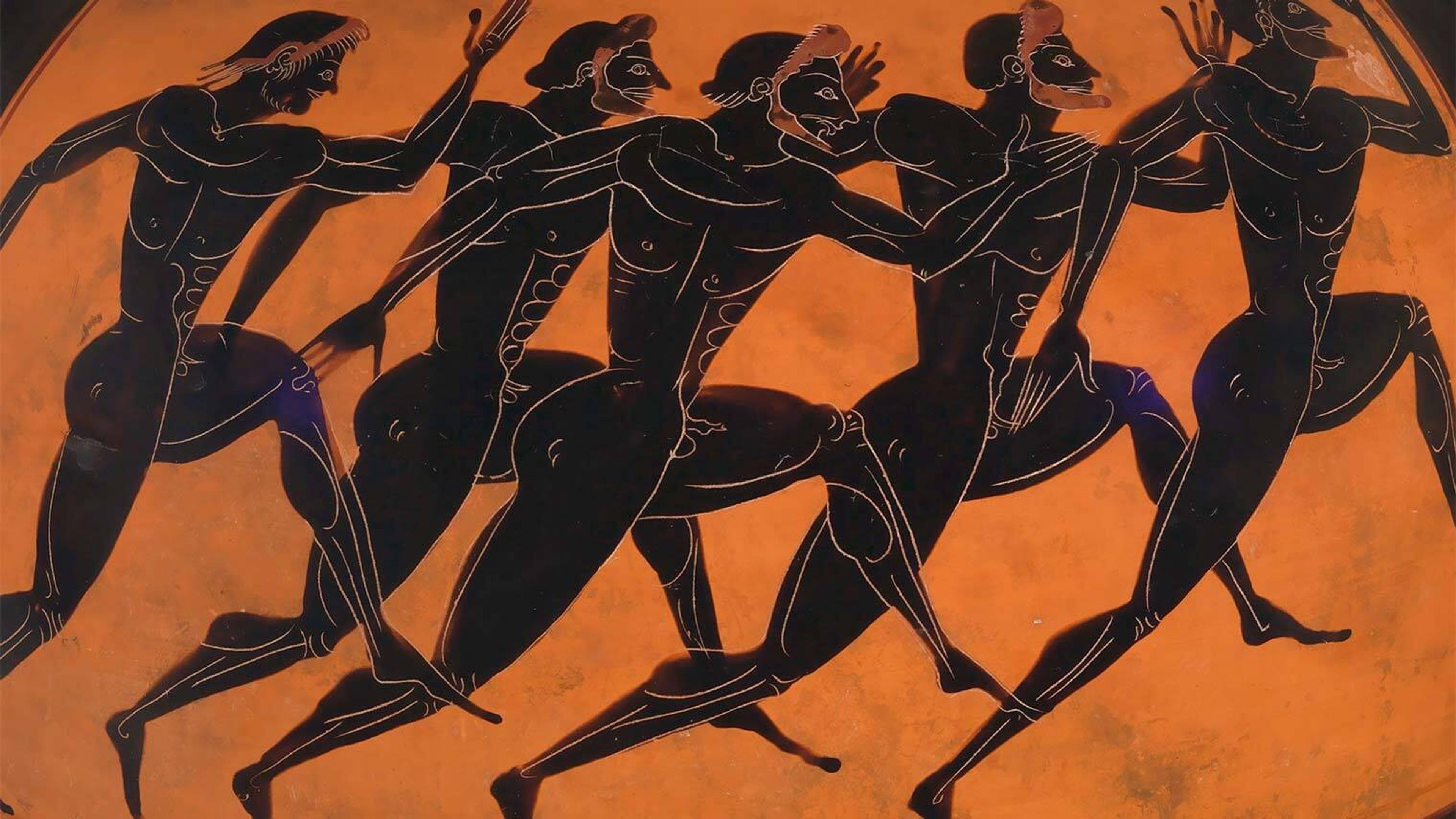
Reverse, footrace
The Euphiletos Painter was trained in the black-figure technique. It is interesting to compare the firm, deliberate incision in his works with the looser, freer line of artists like the Berlin Painter. The footrace is one of the earliest known events in the Panathenaic games.
Artwork Details
- Title: Terracotta Panathenaic prize amphora
- Artist: Attributed to the Euphiletos Painter
- Period: Archaic
- Date: ca. 530 BCE
- Culture: Greek, Attic
- Medium: Terracotta; black-figure
- Dimensions: H. 24 1/2 in. (62.2 cm)
- Classification: Vases
- Credit Line: Rogers Fund, 1914
- Object Number: 14.130.12
- Curatorial Department: Greek and Roman Art
Audio
1017. Terracotta Panathenaic prize amphora
Every four years, games were held at the Panathenaic festival, a celebration in honor of Athena, patron goddess of Athens. Winners in these games received—as prizes—Panathenaic amphoras, vessels of the distinctive shape and size you see here. Each amphora was filled with forty-two quarts of olive oil from groves sacred to Athena.
The production of Panathenaic amphoras began in the sixth century B.C., and continued for several centuries. Athena always appeared on one side, according to a traditional formula. On the other side of the vase, painters depicted the event for which the prize was won. In this case five runners compete in a footrace, probably a sprint. Greek athletes exercised in the nude; and so they offered artists the opportunity to represent the human body in all its beauty, and in action.
More Artwork
Press the down key to skip to the last item.
Related Content
Perspectives
Articles, audio, and video from The Met's online magazine.
Timeline of Art History
Entries and chronologies from The Met's art encyclopedia.

Publications
Books, guides, and catalogues published by The Met.
Research Resources
The Met provides unparalleled resources for research and welcomes an international community of students and scholars. The Met's Open Access API is where creators and researchers can connect to the The Met collection. Open Access data and public domain images are available for unrestricted commercial and noncommercial use without permission or fee.
To request images under copyright and other restrictions, please use this Image Request form.
Feedback
We continue to research and examine historical and cultural context for objects in The Met collection. If you have comments or questions about this object record, please contact us using the form below. The Museum looks forward to receiving your comments.